
vector borne disease control program
Prevention is the best way to guard against insect related diseases.
Mosquitoes
Lehigh County has been conducting mosquito surveillance and control in association with the PA Department of Environmental Protection since 2000.
Ticks
LCCD is engaged in collaborative partnership with DEP to collect and test several species of ticks in public use areas.
Prevention
Vector-borne diseases are an ongoing threat to public health. Take precautions to prevent insect related diseases.
Mosquitoes
Lehigh County has been conducting mosquito surveillance and control in association with the PA Department of Environmental Protection since 2000 when West Nile virus was first detected in Pennsylvania. LCCD works closely with municipalities and county agencies to protect the public health using Integrated Mosquito Management (IMM) principles. We have a strong focus on education and habitat reduction. Mosquitoes are collected in the field with site-specific traps and sent to the DEP Lab in Harrisburg for testing. If West Nile virus is detected, appropriate measures are taken to reduce insect populations and lower the risk of disease transmission to the public.
The DEP West Nile Virus website below shows the virus activity by county and provides more information on what the program does throughout the state.
Surveillance
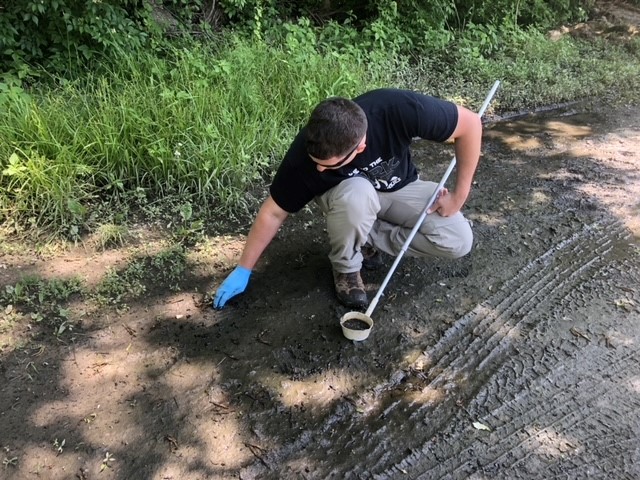
The program monitors adult and larval stages of mosquitoes throughout Lehigh County.
Trapping
There are two main types of traps used by the program to capture adult mosquitoes: gravid traps and dry ice traps. If you see these surveillance tools in your community, please do not disturb them.
Gravid Trap
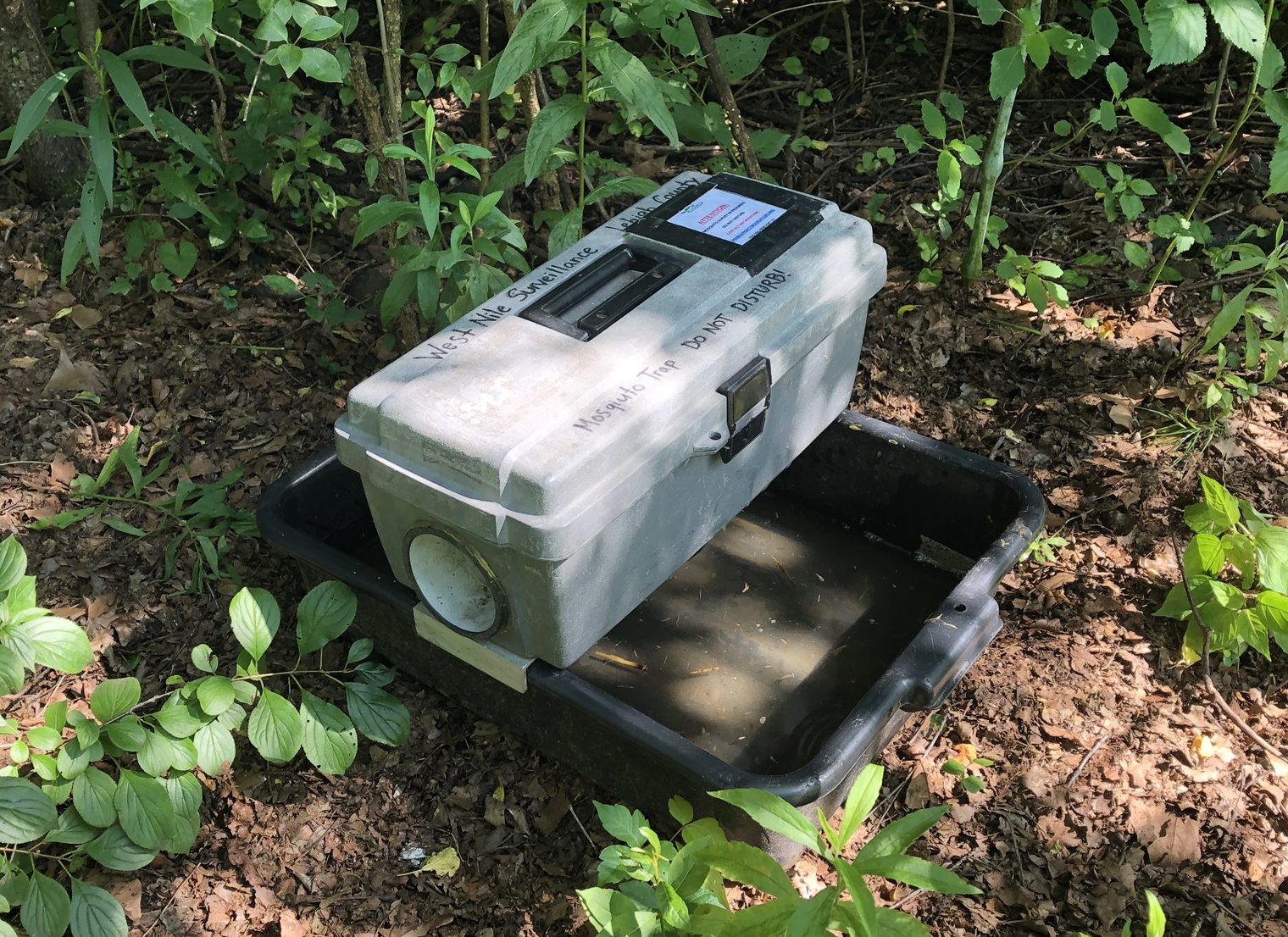
A gravid trap consists of a battery-operated fan that pulls the mosquitoes into a container/net inside the grey toolbox. The toolbox sits on a pan filled with odorous, organic water made from a hay or alfalfa pellet infusion. The organic water creates a scent that attracts blood-fed female mosquitoes seeking a place to deposit their eggs. The mosquito is then pulled into the container/ trap when attempting to deposit their eggs on the water. This trap is designed to collect the Culex species of mosquito.
Dry Ice Trap
Dry ice traps are designed to collect host seeking nuisance mosquitoes. These are species of mosquitoes that are attracted to CO2 and human scent, which makes them more likely to bite people. A thermal container holds solid carbon dioxide pellets/ dry ice that slowly sublimates and releases CO2. A human scent lure is placed in the trap as well. When the mosquito comes near the container, it is pulled into the net by a battery-operated fan.

Traps are set at sites across Lehigh County, including parks, colleges/schools, wastewater treatment plants, cemeteries, churches, and even some private businesses. These traps are usually placed within vegetated areas out of public view and are ran for a 16–24-hour period. The samples are then shipped to the DEP lab in Harrisburg where they are counted, identified, and tested for West Nile Virus.
Control
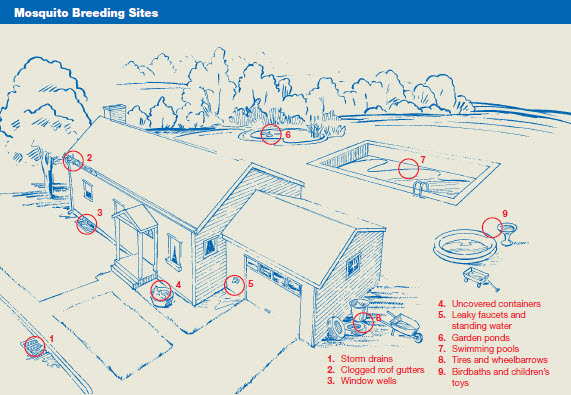
When mosquito larvae are found, the best method for control is source reduction. Source reduction can include dumping standing water, cleaning gutters and yards, covering rain barrels, and/or properly disposing of old tires. If reducing mosquito habitat is not an option, control products are used as a last resort.
Larvicides
Below are the larvicides that our team uses. Please click the name of the larvicide to see the product label.
Adulticides
When the adult mosquito population meets certain thresholds, control events may have to be performed.
Below are the labels for the adulticides that our team uses:
Ticks
LCCD is also engaged in collaborative partnership with DEP to collect and test several species of ticks found in public use areas. The goal is to determine the abundance, density, and infection rate in ticks for several tick-borne diseases such as Lyme disease, Anaplasmosis, and Babesiosis. This data will help inform the medical community in clinical decisions when patients present with tick bites.
The website link below provides more information on the DEPs Tick Surveillance and Testing program.
Surveillance
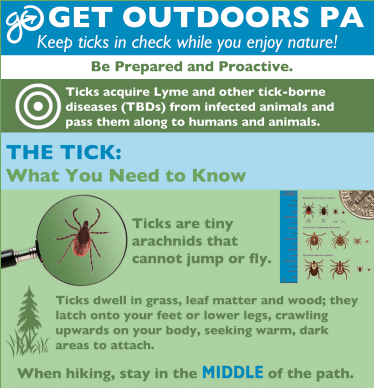
Surveillance for ticks is performed by using a tick drag. A tick drag is a sheet of flannel with a string attached to it, that is then dragged across tick habitat such as forest edges, leaf litter, stone walls, wood piles, or tall grasses.

In Lehigh County, we are primarily concerned with the black-legged tick (Ixodes scapularis), also commonly known as the deer tick, as its species is responsible for most of the disease transmission.

For more information about ticks and tick-borne diseases visit the Tick Encounter website below.
Prevention
Ways to prevent mosquito bites:
- Dump Standing Water – Once a week, empty, turn over, cover, or throw out any items that hold water such as tires, buckets, planters, toys, pools, birdbaths, flowerpot saucers, gutters, tarps, or trash cans.
- Dress Appropriately – Wear loose-fitting long sleeves and pants when outdoors at dusk and dawn.
- Use Physical Barriers – Mosquitoes are weak flyers, using a fan can keep them from encroaching.
- Window/ Door Screens – Ensure that screens on windows and doors are free of cracks or holes.
mosquito breeding sites
Repellents are effective at preventing mosquito and tick bites. Not all products provide the same level of protection. The EPA has an interactive site to determine which products are best for you and your family.
Water sitting longer than 4 days can produce mosquitoes!
Tick Protection Checklist
Click the graphic below to view the tick protection checklist.
